

Recommended Incremental games on Steam
Nothing beats the feeling of numbers going up. For that reason we created this page dedicated to highlighting and recommending incremental games with numbers you didn't even know even existed.
Top 10 Incremental games by players
-
Bongo Cat96% positive (110,709 reviews)Free to playReleased 2025-03-05137,589 players
-
TBH: Task Bar Hero53% positive (47,338 reviews)Free to playReleased 2026-05-2758,053 players
-
Deskrawl: Idle ARPG52% positive (3,174 reviews)$6.99Released 2026-09-2833,794 players
-
Moon Sweepers77% positive (1,569 reviews)$7.64Released 2026-10-2312,850 players
-
IdleOn80% positive (21,716 reviews)Free to playReleased 2025-11-0611,782 players
-
Cookie Clicker97% positive (79,892 reviews)$4.99Released 2021-09-018,284 players
-
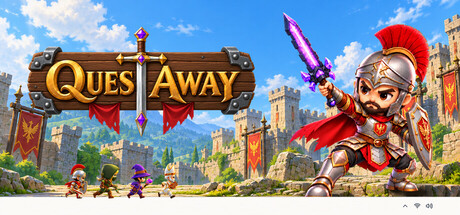
QuestAway21% positive (570 reviews)Free to playReleased 2026-10-247,299 players
-
Revolution Idle86% positive (12,354 reviews)Free to playReleased 2025-05-016,514 players
-
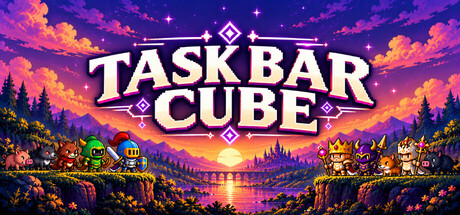
Task Bar Cube17% positive (249 reviews)Free to playReleased 2026-10-254,907 players
-
奇兽杂货铺68% positive (132 reviews)$17.99Released 2026-09-244,090 players

10 new Incremental releases
-
CRACK86% positive (227 reviews)$6.11Released 2026-10-26
-
ONE PIECE: Grand Gourmet75% positive (424 reviews)$19.99Released 2026-10-22
-
One Way Tickets86% positive (1,367 reviews)$14.39Released 2026-10-23
-
ShredDead75% positive (120 reviews)$4.79Released 2026-10-26
-
Selkie's Salvage&Co.100% positive (15 reviews)$6.79Released 2026-10-27
-
Screen Stocks96% positive (57 reviews)$2.99Released 2026-10-27
-
Monster Hatcher87% positive (15 reviews)$5.59Released 2026-10-27
-
Idle Demon Lord II87% positive (15 reviews)$3.99Released 2026-10-27
-
A Dark Cave100% positive (1 reviews)$6.79Released 2026-10-27
-
TCG Card Chaos100% positive (2 reviews)$4.24Released 2026-10-27


Incremental players this week
 Deskrawl: Idle ARPG33k avg players▼ 17.1%
 TBH: Task Bar Hero59k avg players▲ 6.8%
 Bongo Cat137k avg players▼ 1.6%
 IdleOn12k avg players▲ 17.1%
 奇兽杂货铺4.1k avg players▲ 25.9%
9 trending Incremental games
-
Your Big, Cute Monster Farm78% positive (1,093 reviews)$1.07Released 2025-11-11731 players, +97%
-
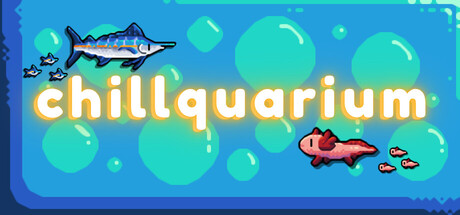
Chillquarium93% positive (6,972 reviews)$2.69Released 2023-09-06430 players, +86%
-
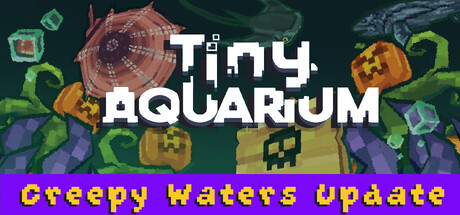
Tiny Aquarium: Social Fishkeeping96% positive (3,667 reviews)$5.24Released 2025-06-23246 players, +68%
-
Shake it Co!100% positive (2 reviews)$4.99Released 2026-08-19112 players, +44%
-
Gamblers Table74% positive (2,786 reviews)$4.40Released 2026-01-11202 players, +40%
-
Cast n Chill95% positive (8,463 reviews)$10.04Released 2025-06-16406 players, +31%
-
Eldara82% positive (255 reviews)$3.75Released 2026-09-02132 players, +28%
-
挂机手游模拟器92% positive (1,106 reviews)$2.99Released 2025-07-30146 players, +25%
-
奇兽杂货铺68% positive (132 reviews)$17.99Released 2026-09-244,090 players, +104%


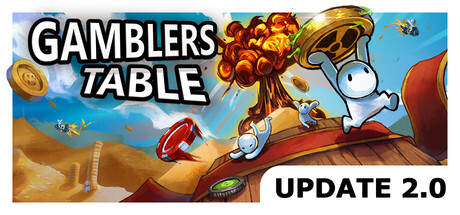



What's moving in Incremental
Releasing in the next 7 days 36 games
Thu 29 – Wed 4 Nov · Ordered by wishlist rank within each day- Thu 29Tomorrow
 Usagi Shima: Bunny Island♥ #601 wishlisted
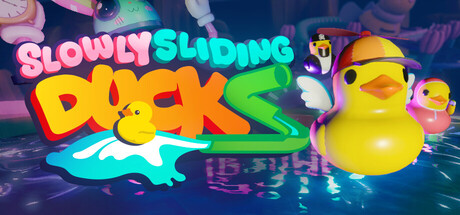 Slowly Sliding Ducks♥ #1,451 wishlisted
 Kingdom Inc.♥ #2,805 wishlisted
 Grombo Card Shop Idle+4 more
- Fri 30
 UNDERDEEP♥ #2,627 wishlisted
 How To Destroy A City♥ #3,984 wishlisted
 Arcade & Motel Simulator Together
 Click&Fix+5 more
- Sat 31No releases
- Sun 1No releases
- Mon 2
 PlinkIdle♥ #3,134 wishlisted
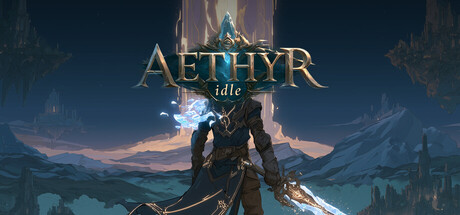 Aethyr Idle
 Capy Farm
 Clicker Astro Planet 2+7 more
- Tue 3
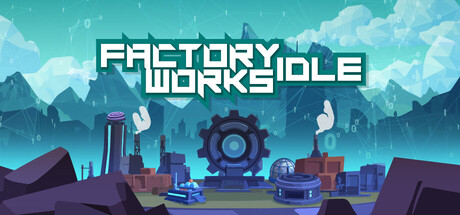 Factory Works Idle
 Heaven Miner
 How Empires Work
 PlankTap
- Wed 4
 Bokcuks
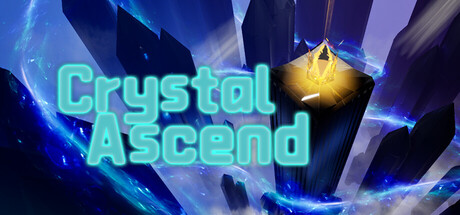 Crystal Ascend
 Hamstr Protocol
 Just Keep Defending And Mining
Just left Early Access 1 game
-
Little Ghosties94% positive (67 reviews)$3.99Released 2026-10-2322 players · 46 days in EA







Top 10 rated Incremental games
-
Shelldiver98% positive (16,460 reviews)$4.99Released 2025-11-16
-
Berry Bury Berry98% positive (8,689 reviews)$7.99Released 2026-01-29
-
Magic Archery98% positive (8,407 reviews)Free to playReleased 2024-10-04
-
Bit Buddy99% positive (437 reviews)$1.99Released 2025-11-19
-
Placid Plastic Duck Simulator98% positive (17,685 reviews)$1.99Released 2022-07-06
-
Nodebuster98% positive (11,604 reviews)$2.99Released 2024-08-13
-
Mini Cozy Room: Lo-Fi99% positive (534 reviews)$2.99Released 2025-03-30
-
Spirit City: Lofi Sessions98% positive (12,083 reviews)$11.99Released 2024-04-08
-
Garden Galaxy98% positive (2,391 reviews)$9.99Released 2022-12-14
-
Proverbs99% positive (526 reviews)$8.99Released 2024-11-07










10 upcoming Incremental games
-
Find The Needle♥ #149 most wishlistedPrice not listedReleases 6 Nov, 2026
-
Guns 'n Goblins♥ #228 most wishlistedPrice not listedReleases Q2 2027
-
10 Million Pixels♥ #529 most wishlistedPrice not listedReleases 13 Nov, 2026
-
Never Sort By Color♥ #533 most wishlistedPrice not listedReleases 10 Nov, 2026
-
DREADNOUGHT TARTARUS♥ #542 most wishlistedPrice not listedReleases Coming soon
-
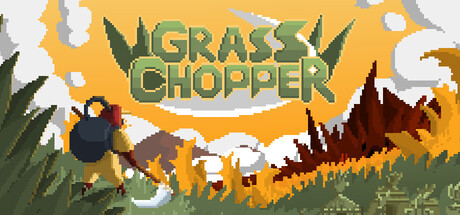
GrassChopper♥ #553 most wishlistedPrice not listedReleases Coming soon
-
Usagi Shima: Bunny Island♥ #601 most wishlistedPrice not listedReleases 29 Oct, 2026
-
Booster Pack Heroes♥ #708 most wishlistedPrice not listedReleases 10 Nov, 2026
-
Wielders of the Essence♥ #1021 most wishlistedPrice not listedReleases 5 Nov, 2026
-
Bioneers♥ #1125 most wishlistedPrice not listedReleases Coming soon







All 2,701 Incremental games at a glance
| Band | Games | Share |
|---|---|---|
| Overwhelmingly Positive | 49 | 4% |
| Very Positive | 476 | 35% |
| Positive | 223 | 16% |
| Mostly Positive | 247 | 18% |
| Mixed | 316 | 23% |
| Mostly Negative | 40 | 3% |
| Negative | 4 | 0.3% |
| Very Negative | 2 | 0.1% |
| Overwhelmingly Negative | 0 | 0% |
| Band | Share |
|---|---|
| Free | 17% |
| < $5 | 50% |
| $5–$10 | 28% |
| $10–$15 | 4% |
| $15–$20 | 1% |
| $20–$30 | 0.4% |
| $30+ | 0.3% |
Most common Incremental tag combinations
Idlers and clickers for everyone
Finding the right idler might be though. Some clicker games take just a few hours to beat with clever mechanics, while others rely on prestige systems to pump the numbers beyond imagination. No matter what playstyle you prefer, the perfect Idler game is waiting for you on Steam.
What is the difference between Incremental, Idler, and Clicker games?
Incremental games serves as the overarching genre umbrella for games focused on numerical growth, scaling production, and unlocking multi-layered upgrade loops. Clicker games represent an active subgenre where progression relies on manual player input, such as rapid tapping or mouse clicking, to generate initial resources.
Idle games sit on the passive end of the spectrum, utilizing automated resource loops, passive generator purchases, and offline progression mechanics. Most modern titles start as active clickers before transitioning into automated idlers as the player unlocks automation systems.
What is a "Prestige" system in Incremental games and how does it work?
A prestige system (also referred to as reset, ascension, or soft reset) is a core meta-progression mechanic where players voluntarily reset their active game progress, resources, and standard upgrades in exchange for a permanent secondary currency.
This secondary currency is spent on permanent global multipliers and high-tier skill trees, allowing players to push past progress bottlenecks and reach higher order-of-magnitude values significantly faster on subsequent runs.
Why are Idle and Incremental games so addictive?
According to game design research, these games leverage psychological principles like operant conditioning and the Zeigarnik effect. They offer constant variable-ratio reinforcement through frequent dopamine hits from numerical growth, milestone achievements, and new feature unlocks.
The low barrier to entry paired with exponential growth curves creates a satisfying feedback loop. Players enjoy high agency over optimization strategies with minimal active input, making the genre uniquely appealing for casual and long-term play.
Is there a difference between free and paid incremental games?
Like in every single game genre, free incremental games are often filled with micro-transactions and make progression hard or intentionally boring to make the speed-ups, overpowered boosts and other packs appealing. But that doesn't mean the free incremental games are bad itself, most of the time you can just play them and invest hundreds of hours without paying anything.
On the other hand, paid incremental games often offer funnier loops, original mechanics and some user interaction that make them fun to play, not just idle games that you run while doing other stuff.
Either you choose to play a free idle game or invest a couple of bucks on a more elaborate one is up to you. During the last years this genre of games have blown up and a lot of cool ideas come from small and indie devs, often under 5 bucks.
You can always take a look at the most played and reviewed ones to have a better idea of what to expect from those games, but the magic of it it's always on the hidden gems that gamers that love the genre support.
How do I know if the incremental has no replay value or is too short?
There is no rule that applies to all the incremental games, but at least when it comes to incremental games on Steam, devs are straight up honest on the game descriptions. It's common for small devs and teams to talk about the duration to complete the whole game or unlock all the upgrades.
In terms of replayability it's also common to disclose if there are prestige systems, or elements that unlock after reaching certain points, making the game an almost infinite, ever-growing game.
If there is no information in the game description or the dev notes, the incremental community will make sure to put the average completion time on the review, or how long did it take them to get bored of it, so feel free to check those if you need more specific information.
As always when choosing your next game you should always try it yourself and get your own opinion instead of blindly trusting others, these days it's even easier thanks to the multiple demos or itch.io version of clicker and incremental games.
Rankings refreshed daily. Last update: 2026-10-28T07:23:17+00:00.